After Council deferred the MOU, O'Connell filed 4 new resolutions seemingly to bypass the process
We keep winning.
Council deferred the MOU twice in December. The Mayor's response? Four new resolutions to bypass it entirely. Same equipment, same grant that funded the Memphis ICE task force. Let's stop them again.
MOU Deferred Twice, Now Bypassed
4 new resolutions vote January 20, 2026
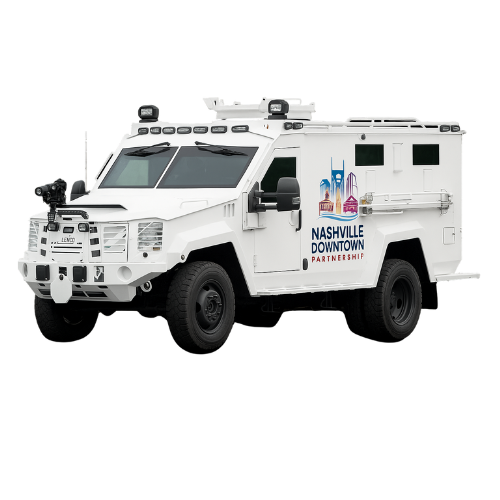
Council deferred the Mayor's $15M surveillance MOU twice in December. His response? File four new resolutions to accept surveillance equipment as "donations"—$3.38M in cameras, armored vehicles, and command trailers—bypassing the MOU process entirely. The same funding mechanism gave $100M to the Memphis Safety Task Force, which includes ICE.
Two days after Renee Good's killing, Nashville Mayor filed for policing equipment from a grant used for ICE and called for more federal law enforcement "coordination" with local agencies.
Read Full Investigation →
"Nashville may be the latest city to leverage a local nonprofit to build a public-private panopticon."
Read Full Analysis →
"State documents show the District Management Corporation, not NDP, was awarded the grant."
Read Analysis →Council deferred the MOU twice—on December 2 and December 16. The Mayor's response? File four new resolutions accepting the same surveillance equipment as "donations," bypassing the MOU process entirely. Here's how this has unfolded:
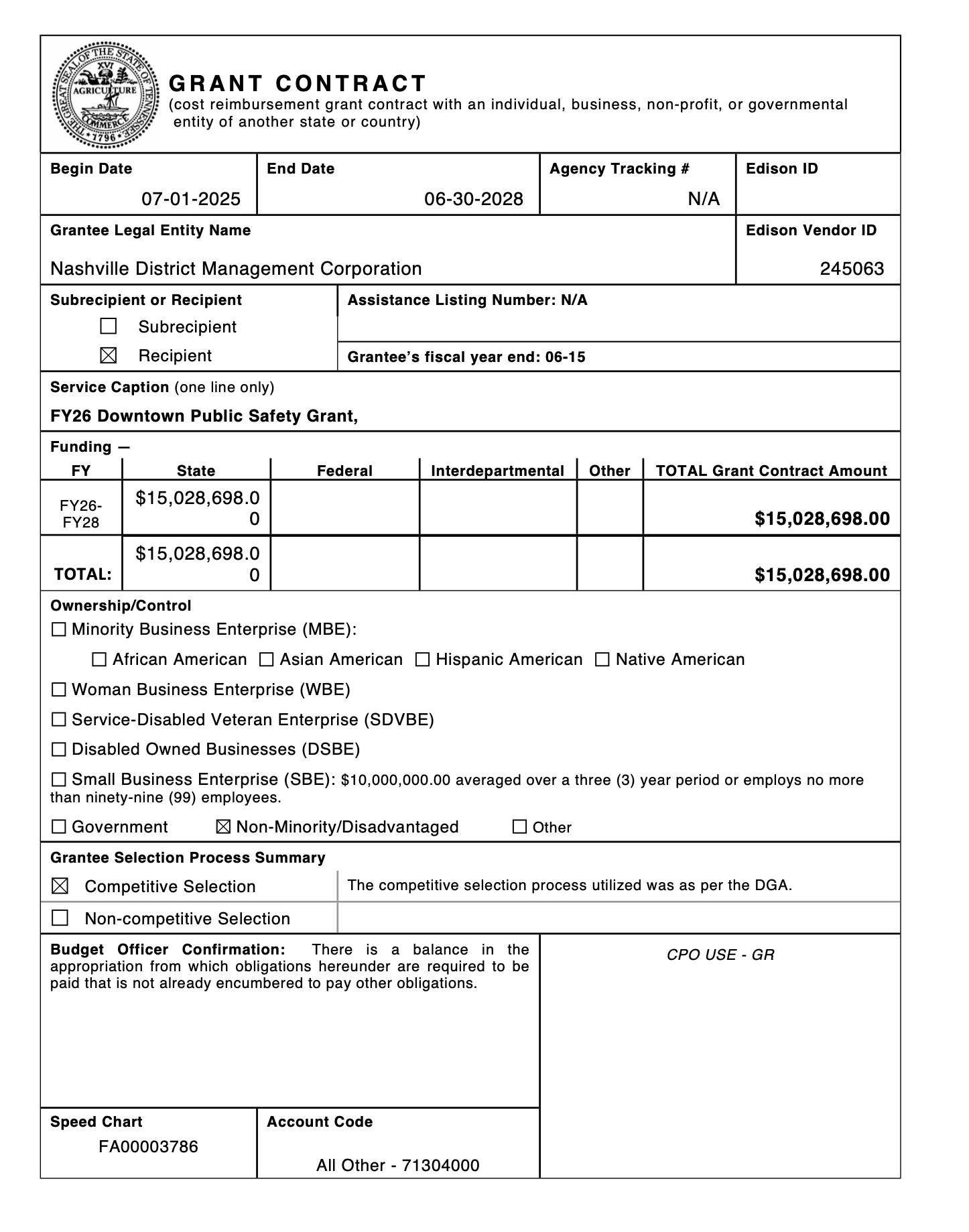
Documents filed Friday before Thanksgiving, designed to transfer $15M to the Nashville Downtown Partnership—a private nonprofit not accountable to voters.
Community pushback worked. Council deferred the MOU after residents and council members raised concerns about oversight and civil liberties.
Council voted 19-17 to defer again after stripping LeoSight and Fivecast platforms. The MOU was scheduled for January 20—but the Mayor had other plans.
The Mayor's Office filed four resolutions to accept $3.38M in equipment as "donations"—bypassing the MOU process entirely. Dave Rosenberg's email said the MOU has "lost most of its significance."
Now Council faces both the deferred MOU AND four new resolutions designed to circumvent it. The same surveillance equipment, just a different path to approval.
"The MOU has 'lost most of its significance.'" — Dave Rosenberg, Mayor's Office (proving the MOU claim of "limiting NDP" was always just a scare tactic)
The equipment list reads like a militarized surveillance wishlist: armored vehicles, AI-powered social media monitoring, real-time camera networks, and mobile command centers.
What is this mystery surveillance software?
"CSC Software, Five Cast — Communication and situational awareness software enabling coordination across multiple safety agencies."
That's the entire description. No vendor details. No capabilities. No cost.
We believe "Five Cast" refers to Fivecast (stylized as one word), an Australian company that provides open-source intelligence (OSINT) surveillance software.
But the MOU's description—"communication and situational awareness"—appears to significantly misrepresent what Fivecast actually does. This is either a mistake or deliberate obscuring.
CBP uses it to detect "sentiment and emotion" in travelers. DCSA monitors 2+ million security clearance holders.
The grant lists a "Tactical Support Post" described as a mobile command post "used by MNPD SWAT." But here's the catch: MNPD can't legally receive these funds—only the Downtown Partnership can.
NDP must purchase the vehicle as grantee of record. Public agencies would use equipment purchased by a private nonprofit—with no public procurement process.
Deployable surveillance centers throughout downtown.
Camera systems that can be installed anywhere in the district.
Audio monitoring technology for public spaces.
"Tech Centers" integrating multiple surveillance feeds.
Command displays linking public and private cameras.
The complete Resolution, MOU, and grant documentation for your own review
Nashville has repeatedly rejected surveillance overreach. Each time they try, Nashville says no.
What was FUSUS? A real-time surveillance platform that would have linked thousands of private and public cameras into a single network accessible to police. Nashville residents fought it through three years and four council votes—withdrawals in 2023 and 2024, a 20-18 vote in December 2024 that fell one vote short of passage, and finally O'Connell's abandonment in April 2025.
After the Juana Villegas case, Davidson County's six-year 287(g) agreement with ICE lapsed and was not renewed.
Metro Council passed ordinance BL2017-646 requiring Council approval before police deploy surveillance technology or enter agreements with private entities to share surveillance information.
In February, Metro Council authorized a limited license plate reader pilot program while explicitly declining to approve facial recognition technology.
MNPD contracted with Fusus in September 2022 without council approval. Residents fought back through three council votes: RS2023-2380 withdrawn, RS2024-158 withdrawn, RS2024-792 failed 20-18 in December 2024 (needed 21 to pass).
After guardrails passed in March, O'Connell abandoned FUSUS in April 2025, citing "erosions in the rule of law at the federal level." Ironically, Trump's lawlessness killed the surveillance push activists had warned about.
They're back—this time routing money through a private nonprofit to bypass the oversight that stopped them before.
After public outcry, Metro Council voted 19-17 to defer the $15M MOU after stripping the LeoSight and Fivecast surveillance platforms.
On January 9, O'Connell filed four resolutions to accept $3.38M in surveillance equipment as direct donations—bypassing the deferred MOU and Metro Code 13.08.080.
Metro Council will vote on the four donation resolutions. Learn about the resolutions and contact your council member before the vote.
Mayor O'Connell abandoned Fusus because federal "erosions in the rule of law" made him doubt whether Metro's guardrails would hold. Now he's backing a system with no guardrails at all.
Under the Tennessee Information Protection Act (TIPA), private entities like the Downtown Partnership can share any and all data with law enforcement—no warrant required, no guardrails possible. The same concerns O'Connell cited for abandoning Fusus apply here with even fewer protections. Federal agencies can request data directly from a private nonprofit that has no obligation to refuse.
According to District Attorney Glenn Funk's office, Nashville is on track for its lowest homicide rate in 60 years and its lowest robbery rate since 1972. Mayor O'Connell himself has emphasized these milestones to state and federal partners. If crime is at historic lows without expanded surveillance, why hand $15 million to a private nonprofit with zero accountability?
Nashville spent three years saying no to Fusus. It took seven months for the surveillance industry to find a workaround—and it's already in the MOU.
In March 2025—at precisely the same time privacy advocates in Nashville killed Fusus and right before O'Connell announced he would not be pursuing it again—the former Chief Revenue Officer of Fusus founded LeoSight.
He spent over three years at Fusus, through Axon's acquisition, helping sell the exact surveillance platform Nashville rejected. Now he's selling the same thing under a different name.
And it's working. Exhibit A of the Downtown Partnership MOU, filed the Friday before Thanksgiving, includes: "CSC Software, Leo Sight: Public Safety software allowing all partners to have situational awareness and communicate via mapping and talk channels."
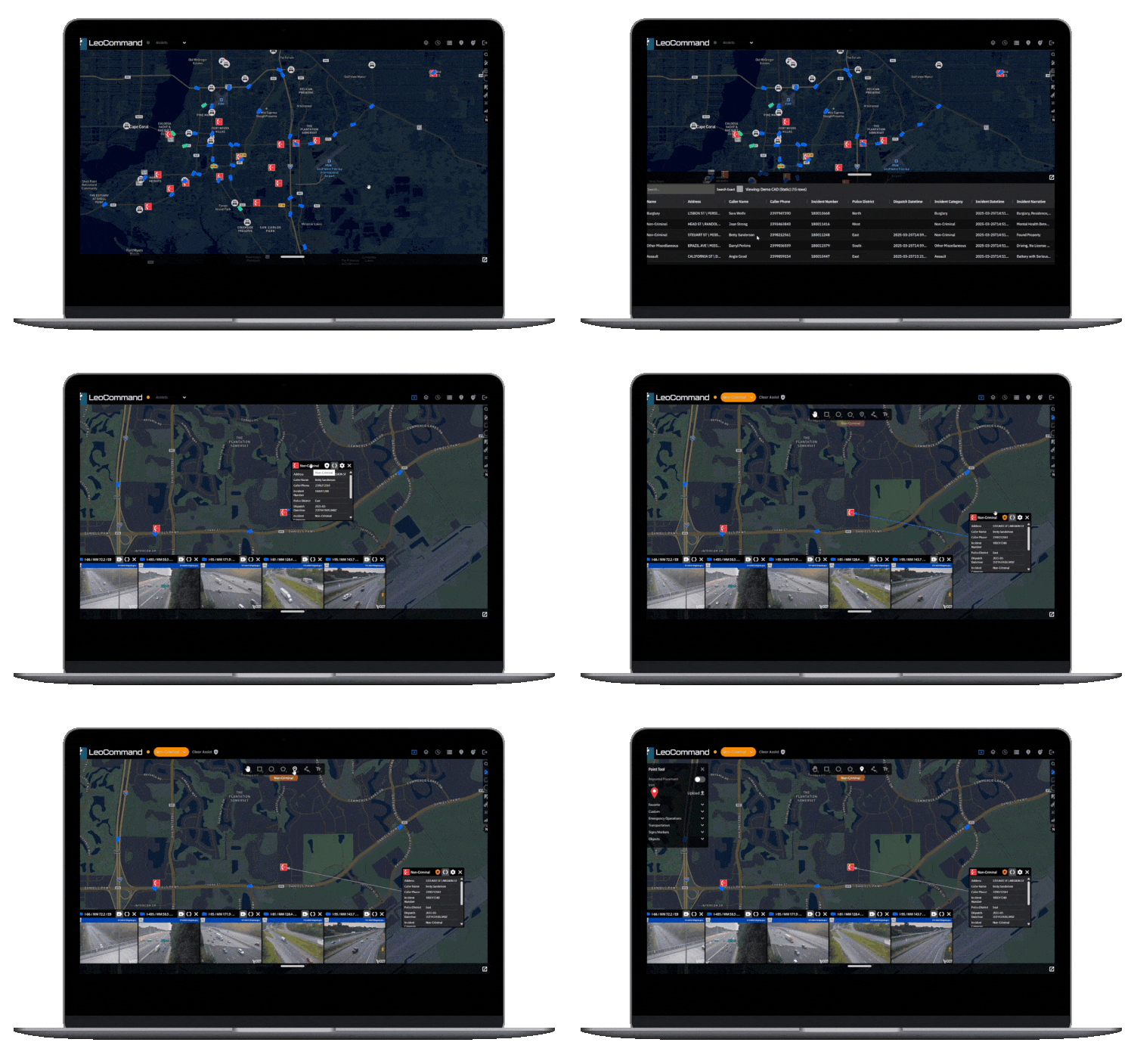
LeoSight's "Unified Command" platform—the same real-time surveillance integration Fusus offered
From Black Ops to Blue Lights: LeoSight was originally developed under the Live Earth brand to support U.S. Special Operations Forces with real-time intelligence during classified operations. Founded in 2015, that same mission-critical surveillance capability now powers law enforcement, fire, rescue, and emergency response teams across the country.
LeoSight integrates the identical surveillance systems as Fusus—creating the same unified command center Nashville already rejected:
The man who spent three years selling Nashville on Fusus watched the community kill it—then founded a company to sell them the same thing through the back door.
"Officer location, alerts, dispatch data, ALPR overlays and video feeds appear on a single live map so command, field and RTCC teams stay aligned in real time."
"LeoSight brings law enforcement, fire, and emergency management into one Unified Command platform. Monitor unfolding incidents with a live, map-based view of units, activity, and alerts."
When MNPD tried to deploy Fusus, Metro's surveillance ordinance applied. Council had oversight. The community had standing to fight.
The Downtown Partnership is a private nonprofit. Once $15 million transfers:
The former Fusus CRO couldn't get his platform through Metro's front door. Now his new company is walking through the Downtown Partnership's side entrance—and Metro is holding it open.
Council members: Did you know the MOU includes surveillance software founded by Fusus's former Chief Revenue Officer?
Did the Mayor's Office?
Did anyone think the community that spent three years fighting this technology deserved to know it was coming back—founded by one of the people who tried to sell it to us the first time?
Different names, same surveillance. The industry will keep rebranding—Nashville must keep saying no.
The Downtown Partnership outsources security to contractors with documented histories of abuse. These are the entities that would control $15 million in surveillance equipment.
Faced 62 violations for allowing employees to impersonate police—32 upheld, resulting in a $64,000 fine. State investigators found their officers wore badges, uniforms, and gear designed to make the public believe they were actual law enforcement.
Source: WSMV4 "Thin Blurred Line" Investigation
A fire in the downtown library parking garage originated in their fourth-floor storage area, causing significant damage to public infrastructure. While the official fire investigation report listed the source as "undetermined," independent reporting and photos after the incident showed dozens of propane tanks stored on site.
Source: Nashville Banner
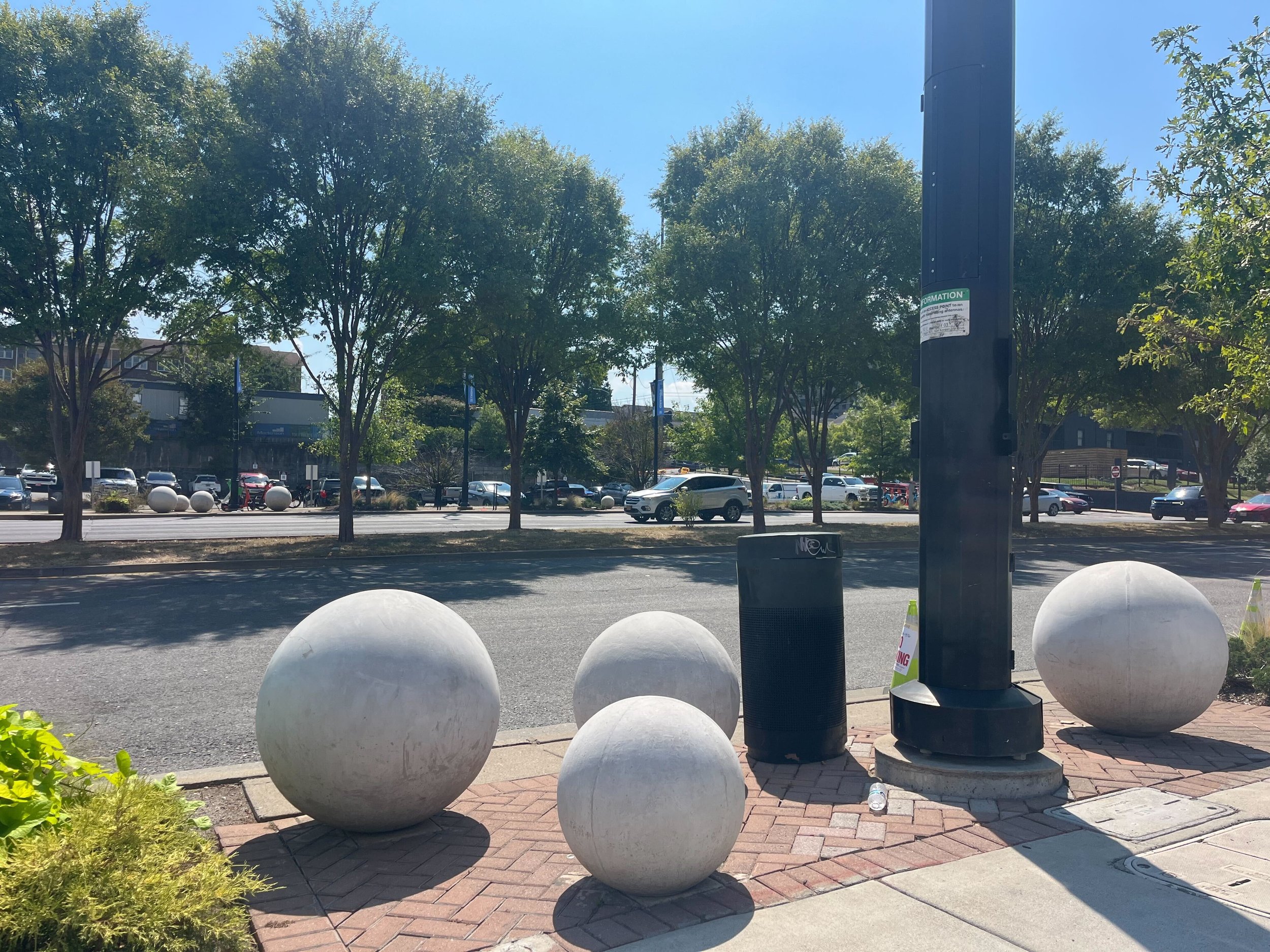
The NDP collaborated with NDOT to remove eight public benches along Korean Veterans Boulevard, replacing them with concrete spheres as a "beautification" project. Advocates accused this of targeting places where Nashville's homeless population is visible—a decision made without public input. If this is how NDP exercises authority over public space, why are we giving them $15 million in surveillance equipment and even more power over downtown?
Source: Nashville Scene
This private entity would control $15 million in surveillance equipment—with zero Metro oversight.
Different communities face different risks from this surveillance infrastructure. Find information tailored to your concerns:
The Mayor signed the agreement, but the MOU cannot take effect without Council approval. Your council member needs to hear from you before January 20.
This vote is happening fast. Share this page with your neighborhood groups, unions, and community organizations.
Public pressure is the only counterweight to surveillance expansion.
What Social Media is Saying